
Heatmap analysis tools have become a staple of growth teams, UX designers, and product marketers. They map user behavior into visual patterns you can do something with, in a flash particularly when you are attempting to enhance user flow without necessarily guessing everything will change at once.
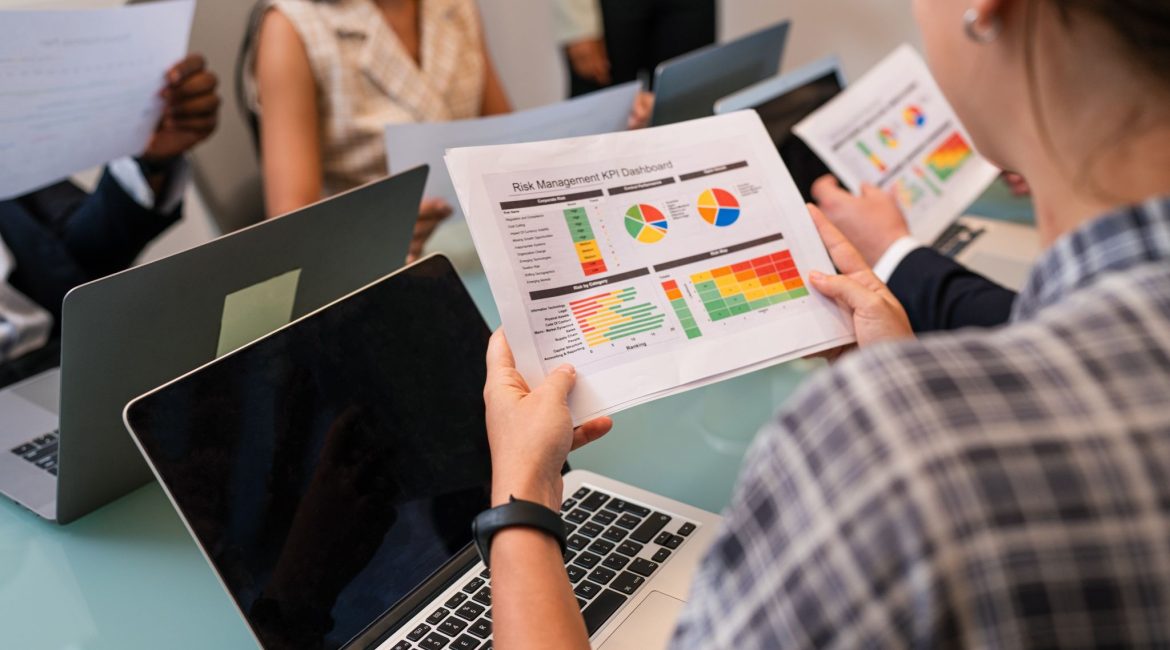
A heat map is an image that shows the aggregated data of user interactions. However, you can see hot areas where users can click, tap, hover, or scroll things, and cold ones where nothing occurs, instead of reading rows of events.
There are three basic views being concentrated in most heatmap analysis tools
Click heatmaps indicate the place of clicking or tapping. They do a terrific job of discovering dead clicks, which are the clicks that a user makes, but the clicked-item appears to be interactive, but actually it isn’t. The Scroll heatmaps present the depth to which the visitors usually go on a page, and this plays a crucial part in ensuring that the content is at the right place, forms should be placed, and CTA should be visible. Move or attention maps are trying to estimate the wandering of the cursor, which may be a function of reading or desktop interest, but is not optimal as an image of eye tracking behavior.
The Reason Why User Flow Breaks In Real Life
The majority of bad user flow is not due to a large problem. Most of the time it is a series of mini frictions. One that is a blend of background. A field where one makes errors but does not show why. A pricing section that is lower than the scroll drop-off point. A mobile menu containing a single page makes the person desire hidden.
The strength behind the heatmaps is that they indicate these frictions where they occur. Combining heatmaps with conversion funnels, session recordings, and on-page surveys will help you often tell that there is a significant conversion blocker in a few days.
The Best kinds of heatmap Analysis Tools
All instruments do not serve the same purpose. Others are so fast in diagnostics of websites. There are others that are more suitable to produce UX within web apps. The most ideal option will be calculated based on the amount of traffic you handle, privacy limit, as well as the level of teamwork which your team requires.
Tools that are website based heatmap but are limited to only click and scroll maps along with simple filtering and session records. Ideally, they are suited to the landing page, blog-to-leads flow, e-commerce product page, and signup funnels.
Product analytics suite can have heat maps of individual page elements, though they are more inclined towards events and funnels than page-level analysis. When you are working within an application that has numerous states and has dynamic parts, you completely have a tendency to require an approach that combines occasion monitoring with page conditions.
How to Interpret Heatmaps and Not Deceive yourself
The integration of the homepage heatmap to include new visitors and returning customers, as well as mobile users and desktop users, is usually deceptive. Desktop users can use a menu when mobile users can rage-tap small objects. Customers who have frequent returns may read less since they are aware of the location.
The majority of heatmap analysis tools allow you to filter by device, source of traffic, geography, new vs. returning and in some cases by specific campaign. Isolate one goal and one audience, in the analysis respectively, with those filters.
Friction patterns, as opposed to isolated clicks, should be next sought. Noise may be one of the hot spots. The hot spot reoccurring after a non-clicking object is a good indicator of misleading design. Weak contrast, inadequate spacing, or undefined copy are typically indicated by a group of clicks along a CTA without being actually on it. The fact that you had a scroll drop-off just before an important section of proof can allude to either excessively long pages or excessively slow or excessively generic page breaks.
World-Examples of Heatmaps that Enhance the UI
Take an example of a SaaS landing page which receives constant traffic but demos are low. The use of a click heatmap presents users with a repeated clicking behavior on a pricing screenshot that is introduced at the middle of the page. The picture is not interactable, but it appears as though a table that can be expanded. That’s dead-click confusion. The solution is easy: you have to change the fixed image with an active pricing module and include an anchor link close to the top of it and make the CTA clearer. That single change in most cases enhances user flow since there is less stagnation when one is about to intend an action.
Within the ecommerce context, it is common with scroll heatmaps showing that customers do not access shipping and returns information that are trust-crucible. When your scroll map has a drastic fall-off above the policies section, drag shipping highlights upwards, or open a sticky drawer with the label of Shipping and returns, or put in a short comforting line just under the Add to cart button. It is an evidence based learning-user flow enhancement and not based on instinct.
Selecting the Appropriate Tool: Real-life Considerations which Count
Using heatmap analysis tools, what counts more is the fit rather than features that you may never use at all.
Begin with simplification of implementation. With weeks to set it, you will defer learning. Search light weight scripts, simple documentation, and the stability performance.
Thereafter assess the level of segmentation. Unless you are able to isolate mobile and desktop or filter by campaign, it will not be easy to convert patterns into decisions.
The other silent distinction is collaboration. The fact that one can send notes on heatmaps, share views and comment on recordings facilitates easier consensus on what the marketing, design, and engineering can fix.
And sampling and data reliability. There are tools that track a subset of sessions, which can work well, but you must have transparency as you can be over-reacting to small samples.
An Easy Workflow Improvement to a better user flow, Weekly
The most reasonable alternative here would be to make a weekly loop of heatmaps to use without getting lost.
Identify a single page that is important and it can be one of the landing page, price page, product page or checkout page. Define one goal for that page. generated heatmaps in the form of pulls and selected session recording on the associated segment. Determine one pattern of friction. Take a theory and make an assumption. Measure impact then using conversion rate after a short time window that suits your traffic.
The Bigger Picture: Heatmaps Make UX a Process, Not a Project
The most effective teams do not consider user experience to be a quarterly redesign. They work on it as real behavior-guided weekly maintenance. It is possible due to the heatmap analysis tools that shorten the gap between something is amiss and the actual actions of the users.
In case you want to reach better user flow, do not aim to be perfect. Aim for clarity. Eliminate false and misleading clicks, move the surface key answers to the top and make the next steps clear and evident at all devices.